
The Ultimate Guide to Pool Maintenance | Keep Your Pool Clean All Year
Keeping a pool clean is not complicated, but it is consistent. The difference between a pool that is a pleasure to swim in and one that is a constant headache is usually a maintenance routine that covers the right tasks at the right intervals. According to the Association of Pool and Spa Professionals, pools that receive weekly maintenance have 60% fewer water quality issues than those cleaned only when problems appear. This guide covers everything you need to know to keep your pool clean, safe, and ready to swim, from daily skimming to seasonal winterization.
Key Takeaways
- Test water chemistry weekly and adjust pH (7.4–7.6), alkalinity (80–120 ppm), and chlorine levels to prevent algae and staining.
- Clean or backwash your filter when the pressure gauge reads 8–10 psi above the clean baseline, typically every 1–2 weeks during peak season.
- Shock the pool every 1–2 weeks during heavy use, or after heavy rain or a pool party, to eliminate contaminants and bacteria.
- Run the pump 8–12 hours per day in summer to circulate the full volume of water at least once.
- Winterize the pool when water temperature drops below 60 degrees to prevent freeze damage to plumbing and equipment.
Daily and Weekly Pool Maintenance Tasks
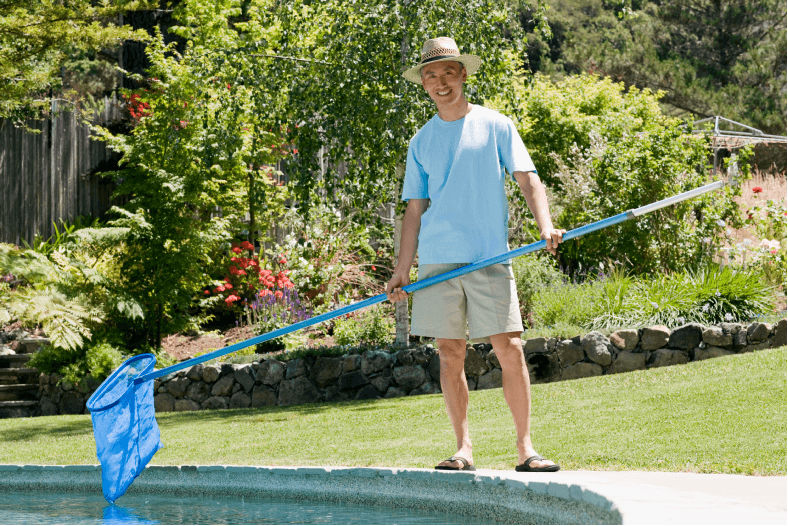
Consistent small tasks prevent big problems. A few minutes of daily attention saves hours of chemical balancing and cleaning later. The most important daily habit is skimming the surface for leaves, bugs, and debris. Use a leaf skimmer or net to remove debris before it sinks and decomposes. This simple step reduces the load on your filter and cuts down on chemical demand.
Weekly tasks include testing the water chemistry, brushing the walls and floor, and emptying the pump strainer basket. A good test kit such as the Taylor K-2006 Complete Pool Water Test Kit gives accurate readings for pH, chlorine, alkalinity, and calcium hardness. Brush the walls and floor especially in corners and behind ladders where algae tends to form. A clean pool is far easier to maintain than one where debris has been allowed to settle.
Water Chemistry: The Foundation of Clean Water
Balanced water chemistry is the single most important factor in pool maintenance. Water that is out of balance not only feels unpleasant to swim in but can damage equipment, stain surfaces, and promote algae growth. The ideal ranges for a residential pool are:
| Parameter | Target Range | Why It Matters |
|---|---|---|
| pH | 7.4 – 7.6 | Low pH corrodes equipment; high pH reduces chlorine effectiveness |
| Free Chlorine | 1–3 ppm | Kills bacteria and algae; the primary sanitizer |
| Total Alkalinity | 80–120 ppm | Buffers pH from rapid swings |
| Calcium Hardness | 200–400 ppm | Prevents plaster etching and scaling |
| Cyanuric Acid (CYA) | 30–50 ppm | Protects chlorine from UV degradation |
Test the water at least once per week during swimming season. Adjust chemicals one at a time and allow the water to circulate for a few hours before retesting. For a full range of pool chemicals and winterizing kits, visit our store.
Filtration: Keeping the Water Clear
Your pool filter is the heart of the circulation system. It runs water through a filter media (sand, cartridge, or DE) to trap particles and return clean water to the pool. Regardless of the type, the filter needs regular cleaning to work effectively. The most reliable indicator is the pressure gauge: when the reading rises 8 to 10 psi above the clean starting pressure, the filter is loaded with debris and needs cleaning.
For sand filters, this means a backwash cycle, which reverses water flow through the sand to flush out trapped debris. For cartridge filters, the cartridge needs to be removed and hosed off. For DE filters, the grid assembly needs to be cleaned and fresh DE powder added. A properly maintained filter keeps your pool water clear and reduces chemical demand. If you are shopping for a new filtration system, explore our pump and filter combos.

Pump and Circulation Schedule
Your pool pump circulates water through the filter and heater, distributes chemicals, and prevents stagnation. In warm weather, run the pump 8 to 12 hours per day to turn over the full volume of water at least once. Many pool owners run the pump during the hottest part of the day to prevent algae growth, or overnight to take advantage of lower electricity rates if available. During cooler months or when the pool is not in use, running time can be reduced to 4 to 6 hours per day.
Keep the pump strainer basket clean by checking it weekly. A clogged basket reduces flow and makes the pump work harder, which increases energy costs. Inspect the pump for leaks, unusual noises, or vibration, which can signal a failing seal or bearing. The pool filters category has a range of options to keep your circulation system running efficiently.
Shocking the Pool
Shocking is the process of adding a high dose of sanitizer (usually chlorine or a non-chlorine shock) to rapidly raise the free chlorine level and kill contaminants that regular chlorination cannot handle. Shock the pool every 1 to 2 weeks during peak swimming season, after heavy rain, or after a pool party with many swimmers. The best time to shock is in the evening so the chemicals have time to work overnight without sunlight degrading the chlorine.
Follow the manufacturer's dosage instructions for your pool size. After shocking, keep the pump running and do not swim until the chlorine level drops back to the safe range of 1 to 3 ppm. If you are opening a pool at the start of the season, a shock treatment is also essential after adding the first round of chemicals.
Pool Cleaning Equipment and Automation
Automatic pool cleaners save significant time, especially during peak season when debris accumulates faster. Robotic cleaners like the BWT ES1500 and the BWT ES ECHO Cordless run independently of your pool pump, use onboard filtration, and clean the floor, walls, and waterline. They are energy-efficient and easy to use. For a full comparison of robotic cleaners, read our BWT pool cleaner review.
If you prefer a manual approach, a good pool vacuum head and telescopic pole are essential. Vacuum the pool at least once per week, paying extra attention to the deep end and areas where debris tends to settle. Brushing the walls before vacuuming loosens algae and dirt so the filter can capture them.
Seasonal Pool Care
Pool maintenance changes with the seasons. In spring, opening the pool involves cleaning, reassembling equipment, balancing the water, and shocking. In summer, the focus is on daily skimming, weekly testing, and running the pump. In fall, debris from falling leaves increases the filter load, so check the pressure gauge more frequently. In winter, the pool needs to be properly closed to prevent freeze damage.
For a complete guide to winterizing your pool, read our step-by-step pool closing guide. It covers lowering the water level, draining equipment, adding winterizing chemicals, and covering the pool. The winterizing kits and winter covers from our store make the process easier.
Common Pool Maintenance Problems and Solutions
Several common issues can disrupt a pool maintenance routine. Cloudy water is often caused by poor filtration, unbalanced chemistry, or insufficient run time. Algae growth usually means chlorine levels are too low or the water is not circulating enough. Scale buildup on tile and surfaces points to high calcium hardness. A chlorine smell that is strong and irritating means the water has chloramines (combined chlorine), which is a sign that shocking is overdue. Testing the water weekly and addressing small issues before they become big ones is the most effective approach.
Frequently Asked Questions
Conclusion
Consistent pool maintenance is the difference between a pool that is always ready to swim and one that requires constant troubleshooting. The fundamentals are simple: test and balance the water weekly, clean the filter when the pressure gauge tells you to, run the pump 8 to 12 hours per day, shock regularly, and winterize properly when the season ends. For more detailed information on specific topics, read our guides on backwashing a sand filter, closing your pool for winter, and how sand filters work. Shop our full range of pool chemicals, filters, and pumps to keep your pool in top shape.
Recent Blogs
How to Close Your Pool for the Season: A Complete Step-by-Step Guide
Closing a pool for winter is easier than most first-time owners think, but skipping the wrong step...
How to Backwash a Pool Sand Filter: A Complete Step-by-Step Guide
If your pool water looks cloudy or the pressure gauge on your sand filter is climbing above normal,...
Are BWT Pool Cleaners Worth It? 2026 Review & Buyer's Guide
If you’ve been searching for a robotic pool cleaner, you’ve probably seen brands like Dolphin, Polar...